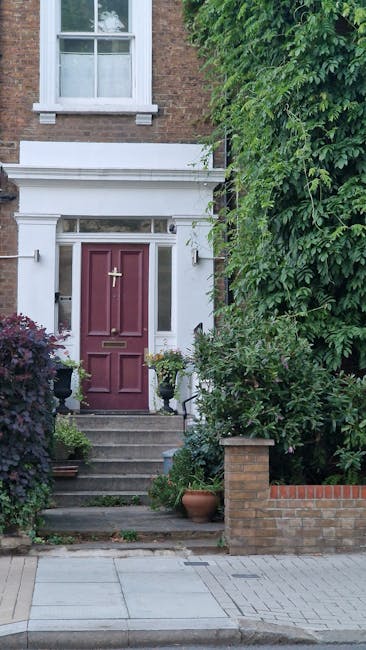
Ilford Broadway gardeners for narrow front gardens
Narrow front gardens can be charming, but let's be honest, they can also be a bit awkward. There is never quite enough room for the wheelie bin, the path, the planting, and that one hedge that always seems to lean into the pavement. If you're looking for Ilford Broadway gardeners for narrow front gardens, you probably want a solution that feels neat, practical, and easy to keep looking good without turning the space into a maintenance headache.
This guide walks through how experienced gardeners approach compact front spaces in and around Ilford Broadway, what really works in a tight layout, and what to avoid if you want the front of your property to look open rather than cramped. You'll also find a step-by-step approach, a realistic comparison of options, and a checklist you can use before booking work in. No fluff. Just useful, lived-in advice.
Why Ilford Broadway gardeners for narrow front gardens Matters
A narrow front garden does more than frame your home. It shapes the first impression, affects day-to-day access, and can make the difference between a front space that feels tidy and one that feels constantly in the way. In a built-up local area, the front garden often has to do several jobs at once: guide people to the door, keep boundaries under control, provide a little greenery, and stay manageable through wet winters and busy weekdays.
That is where skilled Ilford Broadway gardeners for narrow front gardens come in. The point is not just to "make it pretty". The real job is to use the limited width well. That may mean choosing slimmer planting, creating clear lines, keeping edges crisp, and avoiding heavy features that swallow the space. It also means understanding how small design choices change the way the garden feels. A narrow space can look twice as wide with the right layout. Or half as good with the wrong one. Bit unfair, but true.
Front gardens are also public-facing spaces in a way rear gardens usually are not. When hedges overgrow, paving becomes slippery, or bins block the route, the whole frontage starts working against you. A good gardener treats that as a practical layout problem, not just a maintenance task. If you want the broader picture of service support, the services overview is a useful place to see how different garden tasks fit together.
Expert summary: Narrow front gardens work best when every element has a reason to be there. If it does not improve access, structure, or appearance, it usually needs to be simplified, reduced, or removed.
How Ilford Broadway gardeners for narrow front gardens Works
In practice, this kind of gardening work begins with assessment. Not the glamorous part, admittedly, but the most important one. A gardener will look at the width of the space, the condition of the soil or paving, how much light the front gets, where foot traffic falls, and whether the garden is mostly planting, mostly hard landscaping, or a mix of both.
From there, the work usually follows a few clear stages:
- Measure the usable width and identify pinch points near gates, steps, bays, or bin storage.
- Review the existing planting to see what is healthy, what is overgrown, and what is simply too bulky for the space.
- Decide on a layout that keeps access clear while still giving the frontage shape and softness.
- Carry out pruning, trimming, clearing, or redesign work as needed.
- Finish with edging, tidying, and a maintenance plan so the space stays manageable.
Sometimes the job is mostly horticultural. Other times it is a blend of pruning, light landscaping, and routine care. If a front garden is severely overgrown or cluttered, a gardener may start with garden clearance before anything else. If there is a hedge that keeps swallowing half the path, hedge trimming may be the priority. And if the space needs regular upkeep rather than a big reset, garden maintenance is usually the sensible route.
Good work in a narrow front garden is rarely about adding more. It is about editing. Removing the visual noise, trimming back the bulk, and making the eye travel cleanly from the pavement to the door.
Key Benefits and Practical Advantages
The benefits of a thoughtful narrow-front-garden service are both visual and practical. You notice them straight away, and then keep noticing them every morning when you open the front door. That is often the real value.
- Better kerb appeal: A tidy frontage makes the whole property feel cared for.
- Easier access: Clear paths and reduced congestion mean less squeezing past plants, bins, or awkward overhangs.
- Less maintenance stress: Compact spaces can become messy quickly; a good layout keeps upkeep realistic.
- More usable space: Even a very narrow garden can feel functional when it is organised well.
- Improved safety: Overgrown plants, loose edging, and blocked walkways are easier to deal with before they become a nuisance.
- Better plant health: Correct spacing and selective pruning often help plants perform better in small areas.
There is also a confidence factor. When your front garden looks planned rather than squeezed together, the house itself feels more settled. You may not say that out loud over tea, but you'll notice it. And visitors do too.
If the frontage is part of a wider improvement plan, it can make sense to consider other services in tandem, such as landscaping or landscape gardening, especially where hard surfaces, borders, or access routes need to work together.
Who This Is For and When It Makes Sense
This service suits a fairly broad group of people, but the reasons differ. Some homeowners want to improve first impressions before selling or letting. Others simply want a less cluttered entrance. Some are tired of plants that look lovely in spring and completely overwhelm the path by July. All fair reasons.
It makes sense if you:
- have a narrow terrace, semi-detached frontage, or tight town-house entrance;
- struggle to keep hedges, shrubs, or climbers under control;
- want a smarter look without losing what little planting space you have;
- need a low-maintenance plan rather than a decorative jungle;
- are dealing with poor access for bins, deliveries, pushchairs, or mobility aids;
- have inherited a front garden that has become patchy, tired, or overgrown.
It is also a sensible choice if the front garden is not really a garden anymore, just a place where things have accumulated. That happens. Fast. One plant becomes two, the hedge gets a little ambitious, then suddenly the whole thing feels like it is leaning at you.
For ongoing tidy-up work, regular lawn care may still matter, so it can be worth looking at lawn mowing if there is a small strip of turf or a compact lawn section at the front. Small lawns in narrow plots can look brilliant when kept sharp; they can also look scruffy very quickly if ignored for a couple of weeks. Truth be told, that's just gardens for you.
Step-by-Step Guidance
If you are planning work on a narrow front garden, a clear process makes the whole thing easier. Here is a straightforward way to think about it.
- Start with the function. Decide what the space must do first: guide people, hold planting, store bins neatly, or create a welcoming frontage.
- Identify what is too bulky. Large shrubs, wide-edged borders, deep planters, and sprawling climbers can overwhelm a slim frontage.
- Choose one main focal point. In a small space, too many focal points create visual clutter. One strong line or feature is usually enough.
- Keep the path clear. Walk the route from pavement to door and notice where shoulders brush leaves or where footing feels awkward.
- Prune with restraint. Cut for shape, light, and access, not just because something looks a bit wild in the moment.
- Refresh edges and borders. Clean lines make a narrow garden feel more intentional.
- Finish with maintenance planning. Decide how often trimming, mowing, and light tidying will be needed to keep it under control.
If you are comparing service levels, regular upkeep is different from one-off redesign work. A one-off tidy-up may solve the immediate problem, but a recurring plan often gives a better result over time. If you want a service relationship rather than a single visit, start by checking pricing and quotes so expectations are clear from the beginning.
Expert Tips for Better Results
The best narrow front gardens usually share a few quiet habits. Nothing dramatic. Just sensible choices repeated well.
1. Use slimmer planting rather than heavier masses
Compact shrubs, upright grasses, and plants with a narrower growth habit often perform better than broad, shapeless planting. They give height without crowding the route in.
2. Think in layers, not depth
In a slim garden, it is tempting to push everything against the front wall or scatter it across the whole space. Better to work in thin layers: lower planting closest to the path, slightly taller pieces behind, and no giant objects that dominate the middle.
3. Repeat materials and colours
Consistency calms a narrow space. A repeated paving edge, pot style, or planting palette can make the frontage feel deliberate rather than pieced together over time.
4. Keep the eye moving vertically
Tall, narrow shapes often help more than wide, low ones. A well-pruned hedge or a slim ornamental feature can draw the eye up and create a feeling of space. Not magic, just geometry doing its job.
5. Leave breathing room
Empty space is not wasted space in a small garden. A little visual pause makes the planting you do keep feel more valuable.
One more practical note: if a hedge is encroaching on the pavement or road edge, trim it before it becomes a daily annoyance. A quick service visit is easier than trying to wrestle a stubborn hedge back into line after months of neglect. We've all seen that one front boundary that clearly lost the argument.
Common Mistakes to Avoid
Narrow front gardens are easy to clutter. That is the basic problem. People often mean well, but the space punishes overenthusiasm.
- Adding too many small features: Too many pots, ornaments, borders, or mini raised beds can make the garden feel busier than it is.
- Using oversized plants: Large shrubs and wide climbers can steal the whole width.
- Blocking sight lines: If you cannot clearly see the path and entrance, the front garden may feel tighter than it is.
- Ignoring maintenance pressure: A design that looks good for two weeks and becomes unmanageable after that is not really a good design.
- Leaving uneven edges: Sloppy borders stand out in small spaces.
- Forgetting drainage or pooling water: Narrow front areas often show water problems quickly, especially after heavy rain.
A lot of disappointment comes from trying to make a tiny frontage do too much. That is why experienced gardeners simplify first and decorate second. It sounds boring, but it saves money and headaches.
If the garden has become difficult to manage because of bulky growth or leftover debris, a clean-up through garden clearance can give you a proper blank slate. Sometimes that is the only way to see what the space actually wants to be.
Tools, Resources and Recommendations
You do not need a workshop full of specialist kit to manage a narrow front garden, but good tools matter. In small spaces, precision beats brute force every time.
| Tool or resource | What it helps with | Why it matters in a narrow frontage |
|---|---|---|
| Hand pruners | Light trimming and deadheading | Better control around tight planting |
| Long-handled shears | Shaping hedges and shrubs | Useful where a powered tool would be too bulky |
| Edging tool | Sharp border lines | Creates a cleaner visual frame |
| Compact wheelbarrow or trug | Moving waste or materials | Easier to manoeuvre through slim access |
| Measuring tape | Planning widths and clearances | Prevents overfilling the space |
| Professional maintenance schedule | Regular upkeep planning | Keeps the frontage from slipping back into clutter |
For many households, the smartest resource is not a tool but a service plan. A reliable gardener can spot when something needs trimming before it starts blocking light or access. If you are looking for a broader idea of how ongoing support is organised, garden maintenance is worth reviewing alongside one-off tidy-up work.
Sustainability matters too. In compact spaces, waste can build up quickly after pruning or clearance, so it is sensible to work with a team that takes disposal seriously. The site's recycling and sustainability information can help set expectations around responsible garden waste handling.
Law, Compliance, Standards and Best Practice
Front gardens sit in a slightly more sensitive space than back gardens because they often meet pavements, shared boundaries, access routes, and neighbouring properties. That means a little more care is wise. Not dramatic legal drama, just ordinary good practice.
In the UK, gardeners and property owners commonly pay attention to a few practical standards:
- Safe access: Paths should remain usable and reasonably free from trip hazards.
- Boundary respect: Hedges and shrubs should be managed so they do not create avoidable nuisance or obstruction.
- Waste handling: Green waste should be disposed of responsibly, with recycling where possible.
- Working safely: Tools, ladders, and cutting equipment should be used in a controlled way, especially near public-facing areas.
- Clear agreements: The scope of work, access arrangements, and pricing should be understood before work starts.
It is also sensible to ask about insurance and general safety practices, especially when work involves ladders, heavier cutting, or clearance. A transparent provider should be comfortable discussing this. The page on insurance and safety is a useful reference point if you want to understand that side of the service better. Likewise, if you are the kind of person who likes to know how a business handles expectations and complaints, the complaints procedure and terms and conditions are worth a look before you book.
For privacy, payment, and general trust matters, you may also want to check the relevant policy pages. They are not exciting reading, fair enough, but they do matter when you are choosing who to let work on your property. Small detail, big peace of mind.
Options, Methods, or Comparison Table
Not every narrow front garden needs the same approach. Some need a tidy and trim. Others need a rethink. Here is a simple comparison to help you decide what level of work makes sense.
| Approach | Best for | What it usually includes | Main limitation |
|---|---|---|---|
| Routine maintenance | Front gardens already in decent shape | Weeding, trimming, light mowing, edging, tidy-up work | Won't solve a poor layout on its own |
| Selective pruning and reshaping | Gardens with healthy but overgrown planting | Hedge cuts, shrub reduction, path clearance, reshaping | Needs judgment so plants are not stripped too hard |
| Garden clearance and reset | Very cluttered or neglected frontages | Removal of waste, old growth, and obstructive material | Usually followed by further design work |
| Full landscaping | Frontages needing structural change | Paths, borders, surfaces, planting layout changes | More planning and usually more disruption |
If the front garden needs hard features or a new layout, it may sit somewhere between maintenance and redesign. In that case, broader landscaping support or even more design-led landscape gardening can be the better fit. A smaller frontage can still benefit from structure, especially where existing paving or boundaries are dated or awkward.
Case Study or Real-World Example
Imagine a typical narrow front garden on a residential street near Ilford Broadway: a slim strip of soil, a low hedge that has spread wider than expected, a small patch of lawn that is more moss than grass, and a path squeezed between the boundary and the house. Nothing unusual. In fact, that sort of frontage is very common.
The first visit might focus on clearing away the clutter and opening up the route from gate to door. The hedge gets cut back to a sensible profile. The lawn is checked, then either refreshed or reduced if it is simply not practical to keep. Any tired, bulky planting is thinned out. Once the space is readable again, the front starts to feel wider almost immediately.
What tends to surprise people is how much difference light and edge definition make. A tidy border, a clean line along the path, and one or two well-chosen planting elements can completely change the feel of the frontage. The place stops fighting itself. Simple as that.
In one common scenario, the homeowner thinks they need more plants. After a proper assessment, they actually need fewer plants, smaller plants, and a clearer route. It is a bit counterintuitive, but that is why a second pair of experienced eyes helps. A good gardener is not just cutting things down; they are reading the space. That matters.
Practical Checklist
Use this checklist before you book work or start planning changes to a narrow front garden.
- Walk from the pavement to the front door and note any pinch points.
- Check whether hedges, shrubs, or climbers are narrowing access.
- Decide what the front garden must do first: look good, guide access, or stay low-maintenance.
- Identify anything that is too bulky for the width of the space.
- Look for signs of moss, dead growth, or uneven edging.
- Consider whether you need a clearance, a trim, or a full redesign.
- Think about how much maintenance you can realistically keep up with.
- Check whether waste removal and recycling are included.
- Review trust pages such as about us and payment and security before committing.
- Ask what the garden will look like six weeks after the work, not just on the day it is finished.
That last one is the big one. A lot of gardens look great on day one. The real test is whether they still feel manageable after the weather has done its usual thing.
Conclusion
Ilford Broadway gardeners for narrow front gardens are there to solve a very specific problem: making a small, visible, often hard-working space look tidy, feel open, and remain easy to manage. The best results come from restraint, planning, and practical judgment. Not every front garden needs more features. Many need better shape, better access, and less visual noise.
If you remember only one thing, let it be this: narrow front gardens reward clarity. Clear route, clear edges, clear planting choices. Get those right and even a modest frontage can feel welcoming and well cared for. And honestly, that feeling when you step outside in the morning and the front just looks calm? Hard to beat.
Get a free quote today and see how much you can save.
When the front of your home feels easier to live with, everything else tends to follow a little more smoothly. Small space, yes. Small impact, never.
Frequently Asked Questions
What makes a narrow front garden difficult to maintain?
Mostly, it is the lack of space. When a frontage is slim, even a small hedge or a few bulky plants can affect access, make the garden look crowded, and increase upkeep. The margin for error is tiny, so layout matters more than people expect.
Do I need a full redesign, or will trimming be enough?
If the structure is basically sound, trimming and light maintenance may be enough. If the garden feels awkward, blocked, or overstuffed, then a redesign or clearance may be the better long-term fix. A good gardener will usually tell you which option is more sensible rather than pushing the biggest job.
How often should a narrow front garden be maintained?
That depends on the planting and exposure, but front gardens usually benefit from regular attention because they are so visible. Small, frequent visits often work better than waiting for the space to become overgrown. It keeps the job lighter and cheaper in the long run.
Can a small front garden still look attractive without lots of plants?
Absolutely. In fact, many narrow front gardens look better with fewer, better-chosen plants. Strong edging, clean lines, and one or two well-scaled features can look more polished than a crowded display.
What should I avoid planting in a narrow front garden?
Avoid anything that grows too wide, too fast, or too heavy for the available space. Large shrubs, aggressive climbers, and dense planting beds can quickly swallow a slim frontage. Simpler, upright planting is usually safer.
Is garden clearance useful before improving a narrow front garden?
Yes, especially if the space is cluttered or neglected. Clearance creates a clean starting point so you can see the actual structure of the frontage. Without that reset, it is hard to make good design decisions.
Can narrow front gardens be made lower maintenance?
Yes. The trick is to reduce complexity. Choose slower-growing plants, simplify borders, avoid unnecessary ornaments, and keep access clear. Lower-maintenance does not mean boring; it means practical.
How do gardeners make a narrow garden feel wider?
They usually use a mix of clean edges, fewer visual obstacles, lighter planting, and strong lines that draw the eye through the space. Sometimes they also remove overgrown items that visually pinch the garden inward.
What if my hedge is affecting the pavement?
Then it should be trimmed back so the route remains reasonably clear. In a front garden, boundary growth can become a real nuisance quite quickly, especially if it starts to interfere with access or visibility.
Are landscaping services useful for a small front garden?
Yes, if the layout needs more than basic trimming. Landscaping can help with paths, borders, surfaces, and the overall structure of the frontage. It is often the right choice when the space needs to be rethought rather than just maintained.
How do I know whether a gardener is the right fit for this type of work?
Look for someone who talks clearly about access, space, maintenance frequency, and plant scale, not just about cutting things back. The right gardener will understand how a narrow frontage needs to function as well as how it needs to look.
What is the best first step if I am unsure where to start?
Start with an assessment of what the front garden is doing now and what you want it to do better. Then decide whether the priority is clearance, pruning, routine maintenance, or a wider redesign. If you want to learn more about the company behind the service, the about us page is a useful place to begin.